Exploring the history of Labor Day in Seattle
September 11, 2026
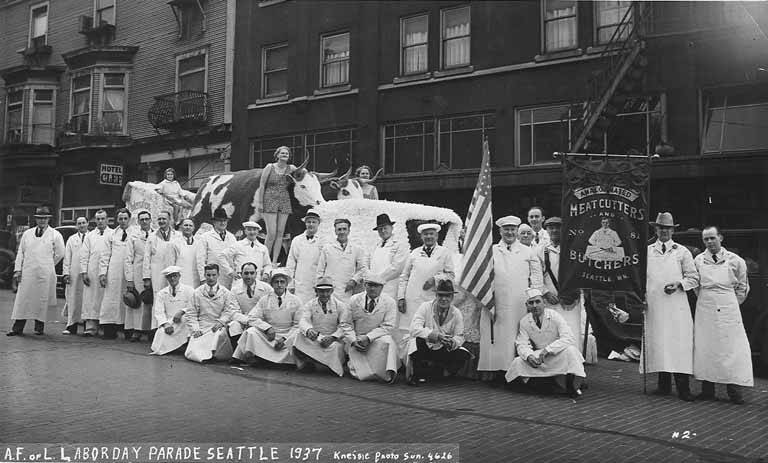
The United States and Canada celebrate Labor Day in September, while most of the world observes it on May 1. Yet the history of the May 1 commemoration is deeply rooted in the American labor movement. Learn about the origin of each day.
September Labor Day – U.S. and Canada
The movement for a U.S. Labor Day began in New York City. In 1882, the Central Labor Union proposed a general holiday for working people. On September 5, 1882, some 10,000 workers marched from City Hall to Union Square, launching an American tradition. In 1891, the first Session of the Washington State Legislature establishes Labor Day as a legal holiday. On a national level, US President Grover Cleveland signed legislation making Labor Day an official federal holiday on June 28, 1894.

May 1 – International Workers’ Day
International Workers’ Day (May 1) traces its history to Chicago. On May 4, 1886, a peaceful rally at Haymarket Square protested police violence against striking workers. After most had dispersed, police ordered the remaining crowd to leave. As they complied, an unknown assailant threw a bomb. Police fired into the crowd, killing seven officers and several civilians.
In the hysteria that followed, eight anarchist labor leaders were arrested. The judge was prejudiced, the jury was packed, and evidence was fabricated. Several of those charged weren’t even at Haymarket. Seven defendants received death sentences. On November 11, 1887, August Spies, Albert Parsons, George Engel, and Adolph Fischer were hanged. A fifth, Louis Lingg, died by suicide. The remaining three received life sentences.

The 2026 May Day march in Seattle.
The executed four became known globally as the “Haymarket Martyrs” and inspired solidarity movements worldwide. In 1893, Illinois Governor John Altgeld pardoned the three survivors, citing the biased judge and stacked jury. The Martyrs became enduring symbols of labor’s struggle.
1886, unions chose May 1st as International Workers Day to commemorate the fight for the eight-hour workday and remember the 1886 “Haymarket Affair”.
Two Labor Days, Two Traditions
The September and May holidays reflect different values. The May holiday was intentionally internationalist, radically oriented, and in direct response to the Haymarket Affair in Chicago. September celebrations—filled with floats, immaculate union uniforms, and American flags—evolved into a more nationally sanctioned civic celebration.
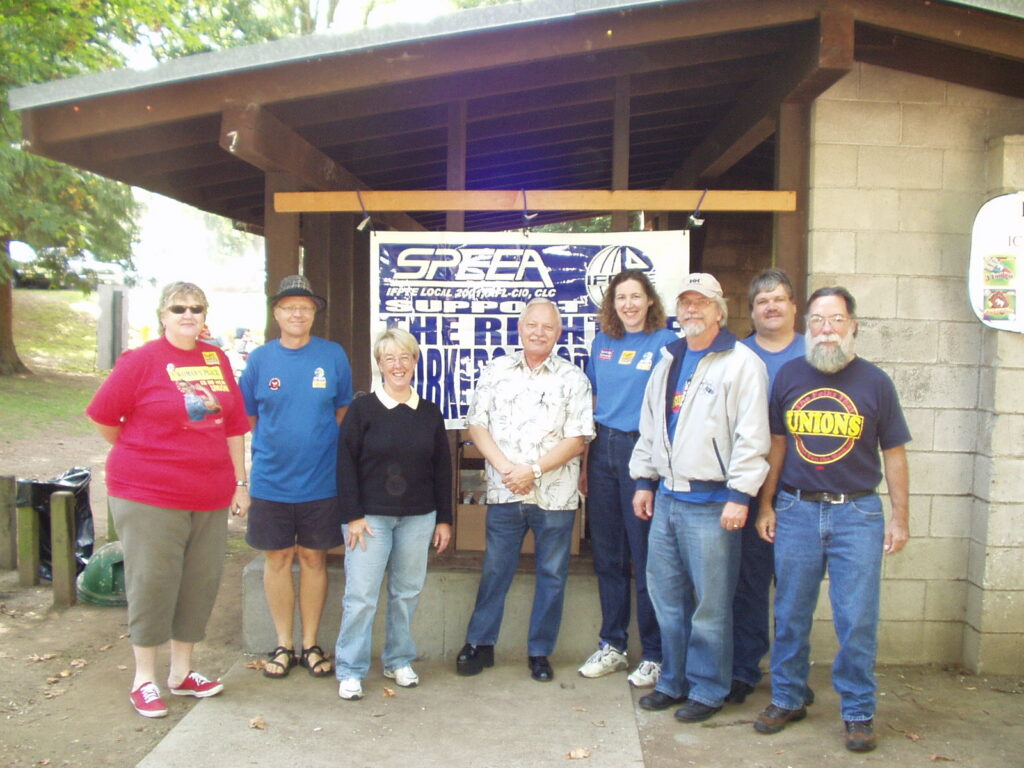
SPEEA members at the Labor Day picnic at Woodland Park in 2004
From Parades to Picnics: Celebrating Labor Day in King County
From the beginning, Seattle embraced Labor Day with enthusiasm. By the early 1900s, industries closed and union members marched annually on the first Monday in September. In 1901, thousands gathered at Sixth and Pike to lay the Labor Temple cornerstone. In 1905, the completed Temple was dedicated after what was called “the largest affair of its kind ever seen in Seattle.”
By the late 1800s, the Seattle Labor Day parade had become a tradition. In 1909, more than 12,000 marched with “bands, floats, banners, and clever costumes.” That parade also served as protest—unions saw the Alaska-Yukon- Pacific Exposition’s choice of Labor Day for “Seattle Day” as an affront. The Union Record declared: “Labor Day is our day, and with it we will brook no interference.”
After the 1940s, many Seattle unions shifted from parades to picnics at local parks—frequently at Woodland Park—a quieter celebration, but the spirit endures. From early-20th-century parades and picnics to the 1940s, Seattle unions celebrated Labor Day with festive civic displays. In 2025, MLK Labor transformed the holiday into a focused protest and rally against corporate power, using the day to mobilize against Palantir Technologies, against authoritarian billionaires, and to defend immigrant workers. Recent Labor Day picnics have taken place in South King County cities like Burien and SeaTac.
This is a collaboration between MLK Labor and the Labor Archives of Washington (UW Seattle). Staff from both organizations provided materials and research in consultation with the Pacific Northwest Labor History Association, local unions, and community members. A rotating series of banners showing the art and history of our local Labor Movement will be on display at the Seattle Labor Temple. If you’re interested in donating or volunteering on this project, please click here. You can also explore the Labor Archives’ collections at laborarchives.org.
organizations in King County, WA.
5030 1st Ave. S. Ste. 301, Seattle, WA 98134